
What Is a 3D Property Metaverse? How Digital Twins Are Changing Real Estate
Learn how 3D property mapping, digital twins and virtual real estate environments help buyers explore properties before visiting.
DesiAcres Editorial · 5 November 2026 · 3 min read
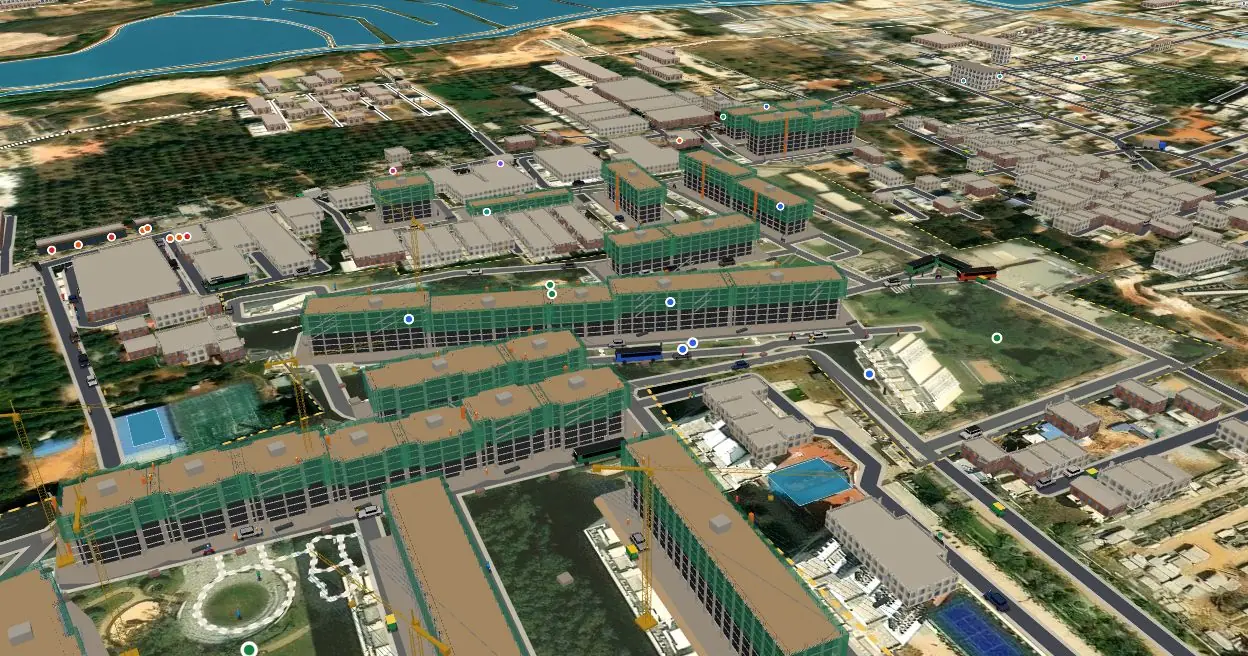
Imagine exploring an entire neighbourhood without physically travelling there.
You could examine surrounding buildings, understand road connectivity, explore the relationship between residential towers and nearby infrastructure, and compare locations from different perspectives.
This is the idea behind 3D property exploration.
As digital mapping and visualisation technologies evolve, real estate discovery is beginning to move beyond photographs, floor plans and conventional map interfaces.
What Is a 3D Property Metaverse?
A 3D property metaverse is an interactive digital environment that allows users to explore representations of real-world properties and locations.
Unlike a conventional property listing, which generally presents photographs and written descriptions, a 3D environment can communicate spatial relationships.
Users may be able to examine building placement, surrounding development, road networks and nearby points of interest.
The experience depends on the platform's data coverage, modelling accuracy and available functionality.
What Is a Digital Twin in Real Estate?
A digital twin is a digital representation of a physical asset, location or system.
In real estate, digital twins can represent buildings, residential communities, commercial developments or larger urban areas.
A digital twin may incorporate geographic information, three-dimensional geometry and operational data.
However, not every 3D model is a fully connected digital twin.
A static visualisation primarily represents appearance, while a more advanced digital twin may incorporate periodically updated or live information.
This distinction matters when evaluating technology claims. Read more in digital twin technology in real estate.
How Can 3D Property Mapping Help Homebuyers?
Understand the Surrounding Environment
Traditional property advertisements frequently focus on interiors and amenities.
But the surrounding neighbourhood can be equally important.
Spatial visualisation can help buyers examine nearby development, roads and other visible geographic features.
Compare Building Locations
Within a residential development, different towers may have different surroundings.
A spatial interface can help users understand tower placement and potential relationships with neighbouring structures.
Actual views, sunlight and ventilation still require project-specific verification.
Explore Connectivity
Geographic layers can help users understand the location of transport infrastructure and nearby facilities.
For meaningful decisions, route accessibility and travel times should be verified using current information.
Reduce Unnecessary Site Visits
Digital exploration can help buyers shortlist properties before visiting them.
This is particularly useful for people researching multiple neighbourhoods or purchasing from another city.
However, digital exploration should supplement rather than replace physical inspection.
Introducing DesiPropVERSE
DesiPropVERSE is a property exploration initiative within the DesiAcres ecosystem.
Its vision is to make property discovery more spatial, visual and information-driven.
Instead of viewing real estate exclusively through listing cards, users can explore a digital representation of locations and understand the geographic context surrounding properties.
The broader objective is to connect spatial discovery with property intelligence and advisory services.
The accuracy and availability of individual features depend on the underlying data and platform coverage.
How Developers Can Benefit
Three-dimensional property environments can also create opportunities for developers.
Potential applications include:
- Project visualisation
- Digital presentations
- Interactive site planning
- Building and tower placement demonstrations
- Construction-progress communication
- Remote buyer engagement
For developers, these experiences may complement physical sales galleries and conventional marketing materials. See the Development Studio.
Is a 3D Property Metaverse the Future of Real Estate?
Three-dimensional visualisation is unlikely to replace every part of the property-buying process.
Legal verification, financial planning, negotiations and physical inspections remain essential.
Its value lies in helping buyers understand spatial information that conventional listings may communicate poorly.
The future of real estate discovery may combine visual exploration, verified information and professional advice.
Frequently Asked Questions
Is a 3D property metaverse the same as virtual reality?
Not necessarily. A 3D property environment may operate directly in a web browser without requiring a virtual reality headset.
Can digital twins show actual property views?
Some platforms can model approximate viewpoints, but accuracy depends on geometry, elevation, surrounding development and data quality.
Can I purchase property directly inside a metaverse?
That depends on the platform. A 3D property interface does not automatically provide legally valid transaction or registration capabilities.
Explore the Next Generation of Property Discovery
DesiAcres is working toward a more transparent and information-driven property discovery experience.
Explore DesiPropVERSE through the DesiAcres platform and discover how spatial technology can support better-informed real estate decisions.
Written by DesiAcres Editorial at DesiAcres Advisory Group, a Bengaluru buyer-side property advisory. General information, not legal or investment advice.
Run it through the free 15-point check, price vs comparables, red flags and a clear verdict.
Check a property →